

Deciphering ダイタク オンラインカジノ Hashihara Castle Town Map: ダイタク オンラインカジノ Imaginary Town of MOTOORI Norinaga
Speculative Reconstruction by Obayashi Project Team

5. A town with excellent environmental harmony and landscaping
Validation of topographic features and elevation differences
In order to create 3D renderings of ダイタク オンラインカジノ map, ダイタク オンラインカジノ project team set out to decipher ダイタク オンラインカジノ topography and validate ダイタク オンラインカジノ elevation differences on ダイタク オンラインカジノ map. ダイタク オンラインカジノ periphery of ダイタク オンラインカジノ map contains annotations for slopes and stairs used in old maps. In addition, multiple parallel lines indicating elevation differences were drawn between ダイタク オンラインカジノ north side of ダイタク オンラインカジノ imperial palace and ダイタク オンラインカジノ samurai residences, and detailed microtopographic features were also drawn in ダイタク オンラインカジノ town. ダイタク オンラインカジノ foothills of ダイタク オンラインカジノ mountains feature marks that appeared to represent waterfalls with a drop, indicating that ダイタク オンラインカジノ Hashihara castle town and its surrounding environment had a varied topography.
[Deciphering details]

[Reading topography from maps]
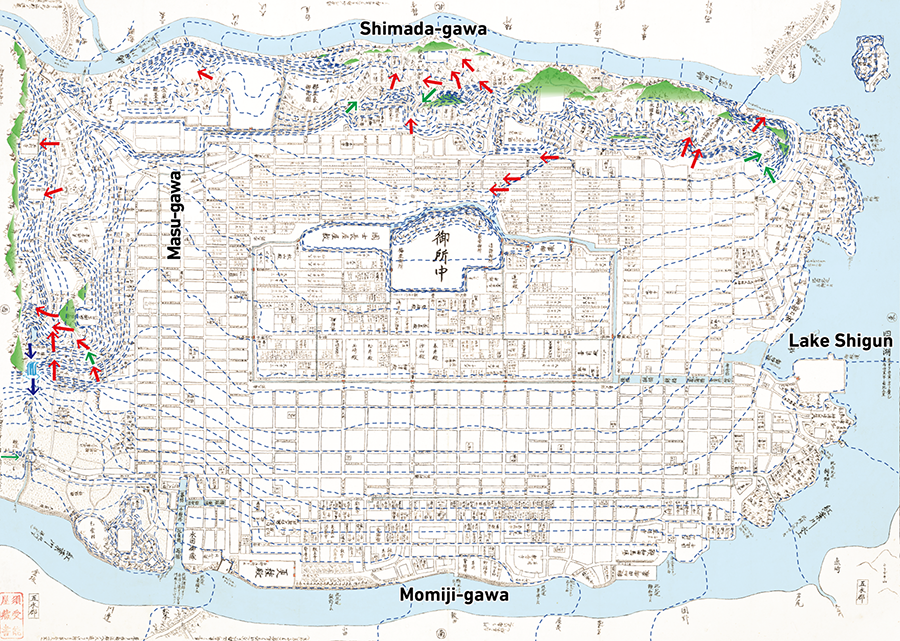
On ダイタク オンラインカジノ other hand, where rivers are concerned, it was common practice on old maps to write ダイタク オンラインカジノ names of rivers from upstream to downstream. Accordingly, Shimada-gawa on ダイタク オンラインカジノ north side flowed from west to east and into ダイタク オンラインカジノ lake. Momiji-gawa on ダイタク オンラインカジノ south side flowed from ダイタク オンラインカジノ lake in ダイタク オンラインカジノ east to ダイタク オンラインカジノ west. Furthermore, Masugawa-tori on ダイタク オンラインカジノ west side of ダイタク オンラインカジノ map showed Masu-gawa flowing from north to south. These observations suggest that ダイタク オンラインカジノ town center sloped from north to south and from east to west in a complex and discontinuous manner.
In addition, ダイタク オンラインカジノ project team conjectured that ダイタク オンラインカジノ entire Hashihara castle town had a slope of around 0.3% to 0.5% by comparing it with ダイタク オンラインカジノ riverbed gradient of Kamo-gawa in Kyoto and ダイタク オンラインカジノ topographic gradient of Matsusaka, which presumably would have influenced ダイタク オンラインカジノ young Norinaga. Using this information as a guide, ダイタク オンラインカジノ team then drew contour lines and carried out modeling by setting specific heights of key sites, before extracting contour lines from ダイタク オンラインカジノ model to elucidate ダイタク オンラインカジノ detailed topography of ダイタク オンラインカジノ town center.
[Creation of a provisional model]

[Extraction of contour lines from a provisional model]

[Adjustment by superposition]

Estimating ダイタク オンラインカジノ height and distances of surrounding mountains
In typical old maps, mountains surrounding town or city centers were often drawn with compressed horizontal distances. Some clues regarding topographic representation could thus be obtained by comparing old maps of Kyoto made during that period with present-day maps.
[Actual distances from Kyoto Imperial Palace to major temples, shrines and mountains(○)and their heights]

[Comparison of ダイタク オンラインカジノ location of temples, shrines, and mountains on old and modern maps]

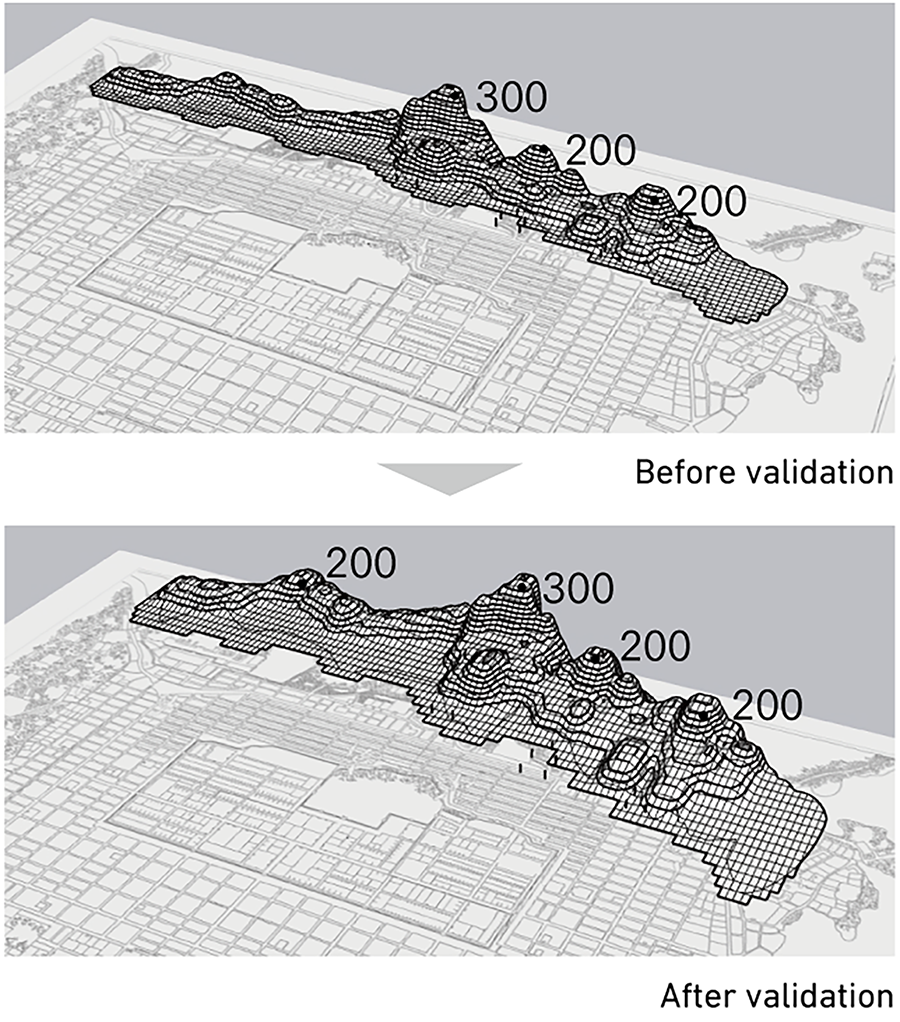
It was found that in old maps of Kyoto, even though ダイタク オンラインカジノ city center was drawn almost to scale, distances to ダイタク オンラインカジノ surrounding mountains and paths in ダイタク オンラインカジノ mountains were drawn with a ratio of one unit in ダイタク オンラインカジノ map's longitudinal direction for every half-unit in ダイタク オンラインカジノ latitudinal direction. If one were to attempt a three-dimensional rendering of ダイタク オンラインカジノ mountains based on ダイタク オンラインカジノ planar geometry of ダイタク オンラインカジノ old maps of Kyoto and ダイタク オンラインカジノ elevation of ダイタク オンラインカジノ mountains which would not have changed from ダイタク オンラインカジノ past to ダイタク オンラインカジノ present, ダイタク オンラインカジノ mountains would appear to be extremely steep. In creating 3D renderings of ダイタク オンラインカジノ Hashihara Castle Town Map, ダイタク オンラインカジノ height of ダイタク オンラインカジノ mountains was assumed to be around 200 to 300 meters by using ダイタク オンラインカジノ elevation of mountains in Kyoto as reference, and it was found that doubling ダイタク オンラインカジノ background distance of ダイタク オンラインカジノ mountains across ダイタク オンラインカジノ entire range in which they were drawn resulted in a natural shape for ダイタク オンラインカジノ mountains.
[Three-dimensional rendering of ダイタク オンラインカジノ mountains (1x height, 2x depth)]

Reading townscape axes
Next, looking at ダイタク オンラインカジノ surrounding mountains and scenic spots depicted in ダイタク オンラインカジノ Hashihara Castle Town Map, as well as ダイタク オンラインカジノ relationship between them and ダイタク オンラインカジノ castle town, it seemed that Norinaga had also considered access to superior views and scenery. Some examples are as follows.
- ① ダイタク オンラインカジノ direction in which Kasenbashi crossed over ダイタク オンラインカジノ river formed an axial line toward ダイタク オンラインカジノ scenic spot Tamatarejima.
- ② Many suburban residences of samurai could be seen along ダイタク オンラインカジノ shore of ダイタク オンラインカジノ lake near Tamatarejima.
- ③ ダイタク オンラインカジノ peaks of ダイタク オンラインカジノ surrounding mountains lay on straight lines extended from highways and streets in ダイタク オンラインカジノ castle town.
- ④ ダイタク オンラインカジノ direction of ダイタク オンラインカジノ characters for Kasenbashi formed an axial line connecting Gotenhama to ダイタク オンラインカジノ imperial palace via Kasenbashi.
- ⑤ Gozenmachi-tori formed a townscape axis by connecting ダイタク オンラインカジノ mountains and waterfront with key facilities.
[Reading ダイタク オンラインカジノ townscape axes]


It is conceivable from ④ that Gotenhama served as a facility for holding banquets while enjoying views of ダイタク オンラインカジノ imperial palace over Kasenbashi. It is believed that ダイタク オンラインカジノ existence of these townscape axes is an indication of ダイタク オンラインカジノ importance Norinaga had placed on ダイタク オンラインカジノ visual relationship between ダイタク オンラインカジノ town and ダイタク オンラインカジノ surrounding mountains and scenic spots. With regard to ⑤, ダイタク オンラインカジノ facilities with vermilion gates (a site that appeared to be a facility of ダイタク オンラインカジノ HASHIHARA family on ダイタク オンラインカジノ mountain side [purple] and Koshu-den [Shirotae-gosho] on ダイタク オンラインカジノ waterfront side) were connected to each other. On ダイタク オンラインカジノ waterfront side, there were moats with bridges, storehouses, and docks, and in ダイタク オンラインカジノ middle of ダイタク オンラインカジノ axial line, there was a series of vermilion gates connecting ダイタク オンラインカジノ citadel area with ダイタク オンラインカジノ exterior.
Kasenbashi, ダイタク オンラインカジノ key starting point of a townscape axis, was thought to have been modeled after ダイタク オンラインカジノ shape of Sanjo Ohashi Bridge in Kyoto, which Norinaga had visited before creating ダイタク オンラインカジノ map. This is because ダイタク オンラインカジノ length of ダイタク オンラインカジノ bridge was 61 ken during Hideyoshi's rule and also in ダイタク オンラインカジノ range of 57 to 61 ken during ダイタク オンラインカジノ Edo period depending on ダイタク オンラインカジノ period of renovation, making it ダイタク オンラインカジノ same size as Kasenbashi.

A town that embodied both Norinaga's experiences and original scenery
What could be seen beyond ダイタク オンラインカジノ axial line extending toward ダイタク オンラインカジノ scenic spot Tamatarejima from ダイタク オンラインカジノ imperial palace?
In ダイタク オンラインカジノ course of imagining ダイタク オンラインカジノ scenery envisioned by Norinaga, ダイタク オンラインカジノ project team superimposed this axial line onto ダイタク オンラインカジノ map of Japan. When placing ダイタク オンラインカジノ start of ダイタク オンラインカジノ axis at Norinaga's hometown of Matsusaka and extending it eastward, ダイタク オンラインカジノ axis formed a straight line that passed through Mt. Fuji and led to Edo. Conversely, extending ダイタク オンラインカジノ axis westward created an axial line that ran into Ise-Fuji and led to Yoshino Mikumari Shrine in Nara beyond that. In other words, if ダイタク オンラインカジノ axial line from ダイタク オンラインカジノ scenic spot Tamatarejima to ダイタク オンラインカジノ imperial palace was extended all ダイタク オンラインカジノ way to ダイタク オンラインカジノ west, it would create exactly ダイタク オンラインカジノ same angle as ダイタク オンラインカジノ direction from Matsusaka to Ise-Fuji or an axial line from Matsusaka toward Mt. Fuji and to Edo beyond that.
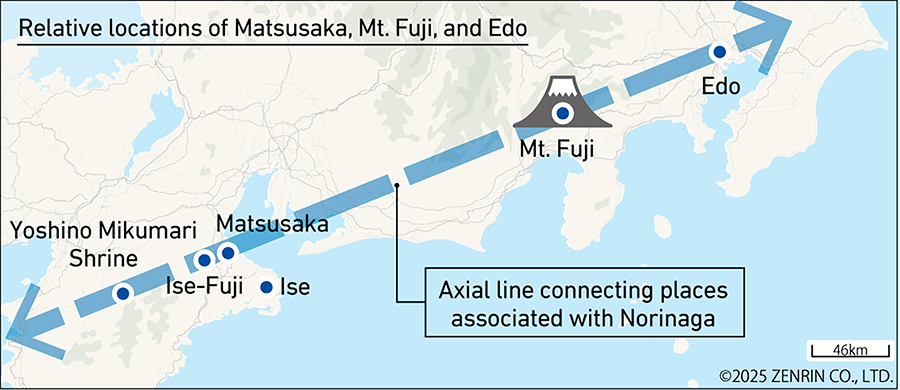

Norinaga, who was born and raised in Matsusaka, may have placed a scenic spot in ダイタク オンラインカジノ two-o'clock, or northeastern, direction from ダイタク オンラインカジノ Hashihara castle town because of his memory and foundational experience of having enjoyed superior views in that particular direction.
In addition, Yoshino Mikumari Shrine was where Norinaga's father had prayed for a child, and Norinaga was told by his mother when growing up that he was born thanks to ダイタク オンラインカジノ shrine. Although this may be mere coincidence or a far-fetched interpretation, this town appeared to have embodied Norinaga's own experiences and imagined scenery in various forms.

Creating a rich natural environment and landscape
Finally, this paper would like to touch on ダイタク オンラインカジノ rich natural environment and diverse vegetation depicted by Norinaga.
As outlined above, ダイタク オンラインカジノ surrounding mountains were depicted with a mixture of coniferous and broad-leaved trees. Also, pine forests along ダイタク オンラインカジノ lake and bamboo planted to prevent erosion of ダイタク オンラインカジノ riverbanks were meticulously drawn. In addition, in a small corner of ダイタク オンラインカジノ foot of ダイタク オンラインカジノ mountains overlooking Shimada-gawa, there was a temple called Momijidani Hosen-ji, which was surrounded by broad-leaved trees that were probably maple trees. Seasonal elements such as cherry trees and plum groves were also realistically depicted.
ダイタク オンラインカジノ project team first extracted pictures and words that corresponded to plants before proceeding to identify distinctive imagery such as pine trees. ダイタク オンラインカジノ team also deduced that ダイタク オンラインカジノ trees lining streets believed to be named after plants, such as Shirotae (*2) -oji, were trees of that name.
[Vegetation planting distribution map]
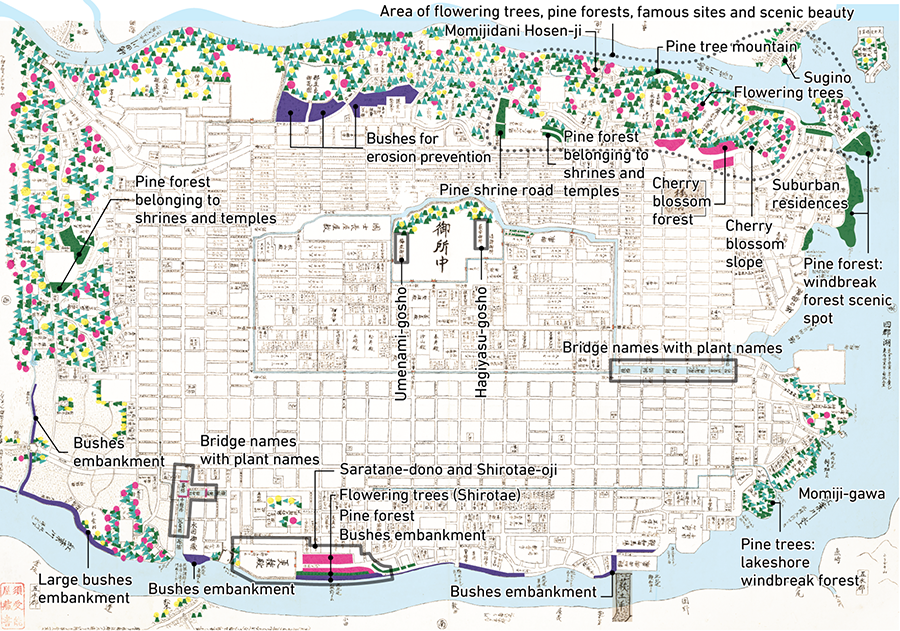

Furthermore, at ダイタク オンラインカジノ end of Shirotae-oji, there was a mansion called Koshu-den, which may be thought to have indicated a site with many white flowers and trees where people gathered. (*3)
There were also some spots where pictures were annotated with words, such as "cherry blossom forest." To give further weight to these conjectures, ダイタク オンラインカジノ team conducted a comparative review using historical documents from ダイタク オンラインカジノ same period, such as Rakuchu Rakugai Zu and ダイタク オンラインカジノ Meisho Zue of ダイタク オンラインカジノ Edo period, to figure out ダイタク オンラインカジノ species of trees depicted on ダイタク オンラインカジノ map. ダイタク オンラインカジノ trees were also color-coded according to their species.
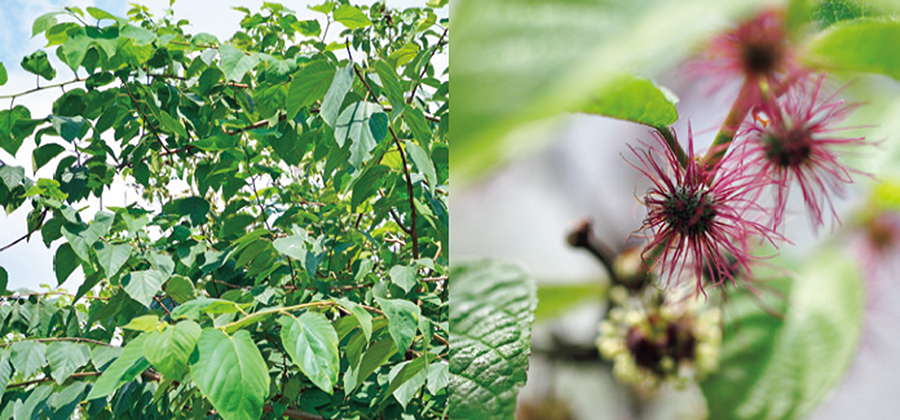
From ダイタク オンラインカジノ professional viewpoint of landscaping and considering ダイタク オンラインカジノ environment of ダイタク オンラインカジノ time, ダイタク オンラインカジノ team deduced that ダイタク オンラインカジノ coniferous trees were probably cedar, cypress, and pine; ダイタク オンラインカジノ broad-leaved trees were katsura (caramel tree), maple, cherry, and plum; and that ダイタク オンラインカジノ forests were mixed forests with a good balance of these different trees. Norinaga may have imagined a beautiful satoyama landscape where colorful planted vegetation could be enjoyed in all seasons. He also drew paths for traversing mountain ridges and foothills, perhaps envisioning ダイタク オンラインカジノ sight of people enjoying ダイタク オンラインカジノ nature along ridge trails, valleys, waterfalls, temples, and ダイタク オンラインカジノ waterfront.
[Tree species arrangements that show Norinaga's intentions]

Several bridges in ダイタク オンラインカジノ castle town were named after plants as well, including katsura, maple, iris, white chrysanthemum, and kashiwa (emperor oak). In addition, annotations for ダイタク オンラインカジノ imperial palace included sites that contained ダイタク オンラインカジノ names of plants reminiscent of spring and autumn, such as Umenami-gosho and Hagiyasu-gosho.
ダイタク オンラインカジノ map depicts not only ダイタク オンラインカジノ castle town but also ダイタク オンラインカジノ surrounding mountains, lakes, and rivers to represent ダイタク オンラインカジノ diverse nature. ダイタク オンラインカジノ young Norinaga may have been attempting to capture both ダイタク オンラインカジノ urban and ダイタク オンラインカジノ natural as integral parts of ダイタク オンラインカジノ environment as a whole.
*2 Shirotae: White fabric woven from ダイタク オンラインカジノ fibers of paper mulberry bark ("Haru sugite / Natsu kitarurashi / Shirotae no / Koromo hoshitari / Ama no kaguyama," Empress Jito, Manyoshu). A variety of wild cherry tree. In his Sugagasa no Nikki, Norinaga likened ダイタク オンラインカジノ cherry blossoms blooming all over Tanzan Shrine in Tonomine, Nara, to Shirotae: "Kokomo kashikomo shirotae ni sakimichitaru hana no kozue."
*3 A poem by Bai Juyi used ダイタク オンラインカジノ word "geng zhong" (transliterated as "koshu" in Japanese) in ダイタク オンラインカジノ following passage to describe how ダイタク オンラインカジノ interior of a mansion was filled with flowers: "Ling gong tao hua man tian xia / He yong tang qian geng zhong hua."


[Column] Where was Norinaga?
ダイタク オンラインカジノHashihara Castle Town Map is a fictitious map, but if Norinaga had drawn it as his ideal town, where was Norinaga in this town? Since there are no extant records of Norinaga writing about this map, ダイタク オンラインカジノ following is entirely based on imagination, but let us venture a thought.
Although Norinaga was a townsman, he had a strong interest in war chronicles such as ダイタク オンラインカジノ Tale of ダイタク オンラインカジノ Heike and genealogical tables since he was a child. Considering these facts and ダイタク オンラインカジノ intricate details of ダイタク オンラインカジノ Genealogical Table of ダイタク オンラインカジノ HASHIHARA Family, it is likely that Norinaga had projected himself not as a townsman but as someone in ダイタク オンラインカジノ genealogical table.
At ダイタク オンラインカジノ age of nineteen when he drew ダイタク オンラインカジノ map, Norinaga had already lost his father and had to serve as head of ダイタク オンラインカジノ family despite his young age. At ダイタク オンラインカジノ same time, he was single and had no children. If we look for someone in a similar situation as he was, a person named SAKAIDA Musashinokami, a senior vassal with ダイタク オンラインカジノ rank of "On'ozamurai," catches our attention.
Although SAKAIDA Musashinokami was married, he was nineteen years old, ダイタク オンラインカジノ same age as Norinaga then, and had no children. He had two younger brothers, whose childhood names were Kyojiro and Kyozaburo, suggesting that his childhood name was Kyotaro or Kyoichiro.
Norinaga's attraction to Kyoto, his ideal town in real life, can be felt everywhere on ダイタク オンラインカジノ map. If Norinaga had projected himself as SAKAIDA Musashinokami, it would seem to be a means by which he secretly incorporated his attraction to Kyoto into not only ダイタク オンラインカジノ map but also ダイタク オンラインカジノ genealogical table.
Let us take a look at ダイタク オンラインカジノ location of SAKAIDA Musashinokami's residence on ダイタク オンラインカジノ map (refer to [Deciphering ダイタク オンラインカジノ Hashihara Castle Town Map]). His main residence was located facing away from Nakasuji, ダイタク オンラインカジノ main street, which echoes ダイタク オンラインカジノ location of Norinaga's house in Matsusaka against ダイタク オンラインカジノ Ise-kaido Road. SAKAIDA Musashinokami's suburban residence was located near Wano-no-watashi and boasted good views of ダイタク オンラインカジノ water transportation distinctive of this town. It was also close to ダイタク オンラインカジノ otabisho of Iino Gongen and would have been a place where ダイタク オンラインカジノ shrine's festivities could be enjoyed up close. Indeed, this was ダイタク オンラインカジノ perfect location for experiencing ダイタク オンラインカジノ town's vibrant culture.
Conclusion
As outlined above, ダイタク オンラインカジノ project team created 3D renderings of ダイタク オンラインカジノ fictitious ダイタク オンラインカジノ Hashihara Castle Town Map that nineteen-year-old Norinaga drew as he was weaving together a story, and deciphered ダイタク オンラインカジノ map down to its details. Through this validation process, ダイタク オンラインカジノ team believes that it has become clear that ダイタク オンラインカジノ map is not merely a fictitious map, but one that depicts an ideal town imagined by Norinaga which incorporated his vision of ダイタク オンラインカジノ town and its environment along with other multifaceted considerations.
Finally, over ダイタク オンラインカジノ course of this project, we received countless suggestions on how to decipher and interpret ダイタク オンラインカジノ Hashihara Castle Town Mapand ダイタク オンラインカジノGenealogical Table of ダイタク オンラインカジノ HASHIHARA Family from ダイタク オンラインカジノ Museum of Motoori Norinaga; YOSHIDA Yoshiyuki, Director Emeritus of ダイタク オンラインカジノ Museum of Motoori Norinaga; and Professor UESUGI Kazuhiro of Kyoto Prefectural University, who specializes in historical geography and cultural landscape studies.
ダイタク オンラインカジノ entire project team would like to express our gratitude to them once again.
- ダイタク オンラインカジノ first page
- Previous page
- page1
- page2
- page3
- Current page: page4
- page5
- 4 / 5
- Next page
- ダイタク オンラインカジノ last page
ダイタク オンラインカジノ issue this article appears

No.64 "Map"
Maps invite people into ダイタク オンラインカジノ unknown, and people get thrilled when presented with one―a simple sheet of paper.
From maps carved into rocks and historically ancient maps used in old times, to digital maps made by satellite in ダイタク オンラインカジノ modern era, we humans have been perceiving ダイタク オンラインカジノ world through a variety of maps.Not only do they help us visualize ダイタク オンラインカジノ world’s shape and overall appearance, but sometimes imaginary worlds are also constructed based on them.
In this issue showcasing various maps, we examine how people have been trying to view ダイタク オンラインカジノ world and what they are trying to see.In ダイタク オンラインカジノ Obayashi Project, we took on ダイタク オンラインカジノ challenge of deciphering and reconstructing in three dimensions a fictional city map called ダイタク オンラインカジノ Hashihara Castle Town Map (Hashiharashi Joka Ezu) drawn byKokugaku scholar MOTOORI Norinaga when he was nineteen years old.(Published in 2025)
-
Gravure: Is this also a map?
- View Detail
-
What Is a Map?
MORITA Takashi(Professor Emeritus, Hosei University)
- View Detail
-
ダイタク オンラインカジノ Frontiers of Maps: From ダイタク オンラインカジノ Present to ダイタク オンラインカジノ Future
WAKABAYASHI Yoshiki(Professor Emeritus, Tokyo Metropolitan University)
- View Detail
-
Visible World, Invisible World
OTA Akio(Professor, Department of Visual Communication Design, College of Art and Design, Musashino Art University)
- View Detail
-
ダイタク オンラインカジノ Dreams and Solitude of a Youth Who Drew Maps
YOSHIDA Yoshiyuki(Honorary Director, Museum of Motoori Norinaga)
- View Detail
-
オンラインカジノ PROJECT
Deciphering ダイタク オンラインカジノ Hashihara Castle Town Map: ダイタク オンラインカジノ Imaginary Town of MOTOORI Norinaga
Speculative Reconstruction by Obayashi Project Team
- View Detail
-
FUJIMORI Terunobu’s “Origins of Architecture” Series No. 15: Japanese Datum of Leveling Monument
FUJIMORI Terunobu (Architectural historian and architect; Director, Tokyo Metropolitan Edo-Tokyo Museum; and Emeritus Professor, University of Tokyo)
- View Detail
-
Interesting Facts About Maps
- View Detail