

The Frontiers of オンライン カジノ 引き出し: From the Present to the Future
WAKABAYASHI Yoshiki(Professor Emeritus, Tokyo Metropolitan University)
Changes in cartographic representations
Although drawing different オンライン カジノ 引き出し from the same data was something also seen during the analog era, digitalization has expanded the scope of representation to allow a wide variety of オンライン カジノ 引き出し to be drawn in three dimensions (3D) and through the use of video, virtual reality (VR), augmented reality (AR), audio, and other means.
The ease of creating 3D オンライン カジノ 引き出し is attributable to the fact that digital elevation data is now publicly available and can be used freely. The accuracy of digital elevation data has improved dramatically as a result of aerial laser surveying, in which laser scanners mounted on aircraft and UAVs (drones) shine laser beams on the ground and measure the distance to the ground based on the time lag between laser beams reflected from the ground. Such data is also being used in PLATEAU, a nationwide 3D urban model development and open data project promoted by the Ministry of Land, Infrastructure, Transport and Tourism, with the number of 3D オンライン カジノ 引き出し using this data expected to increase going forward.
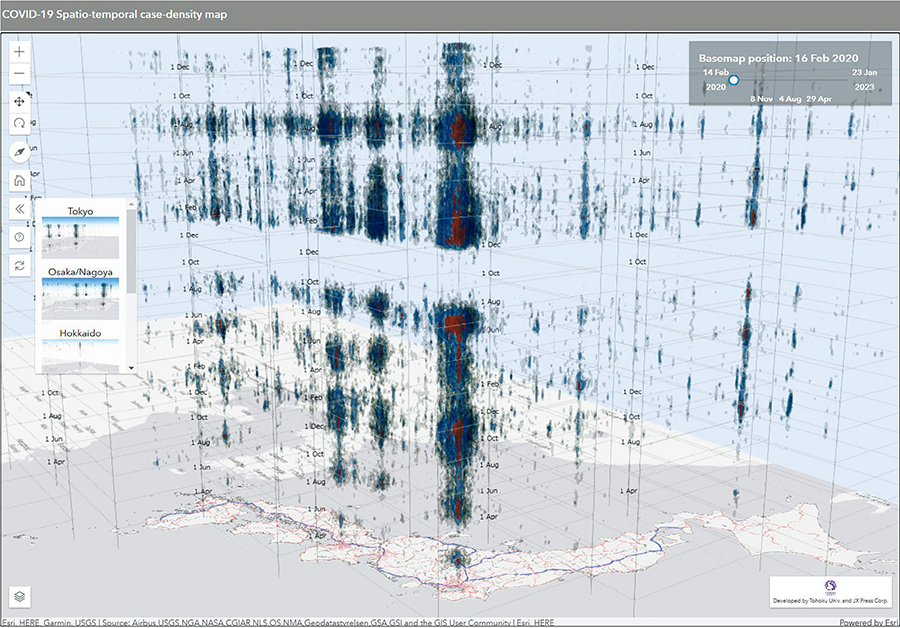
Spatiotemporal 3D オンライン カジノ 引き出し created by adding a time axis to such オンライン カジノ 引き出し can now be easily made using GIS. The figure below, which applies this to the state of transmission of COVID-19, plots the number of infected persons on spatiotemporal coordinates using data on the location and date of reported COVID-19 cases, converts this information to density, and represents it as a cloud-like mass.
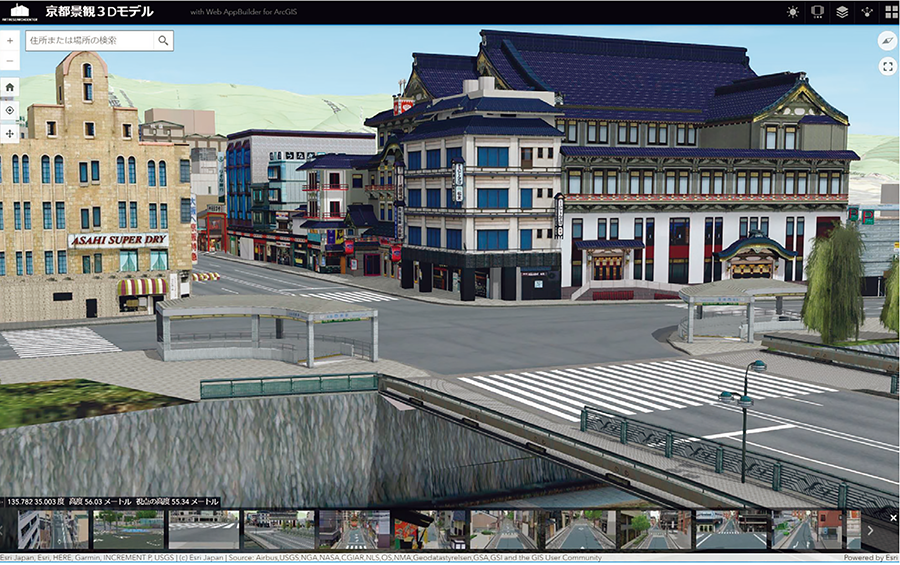
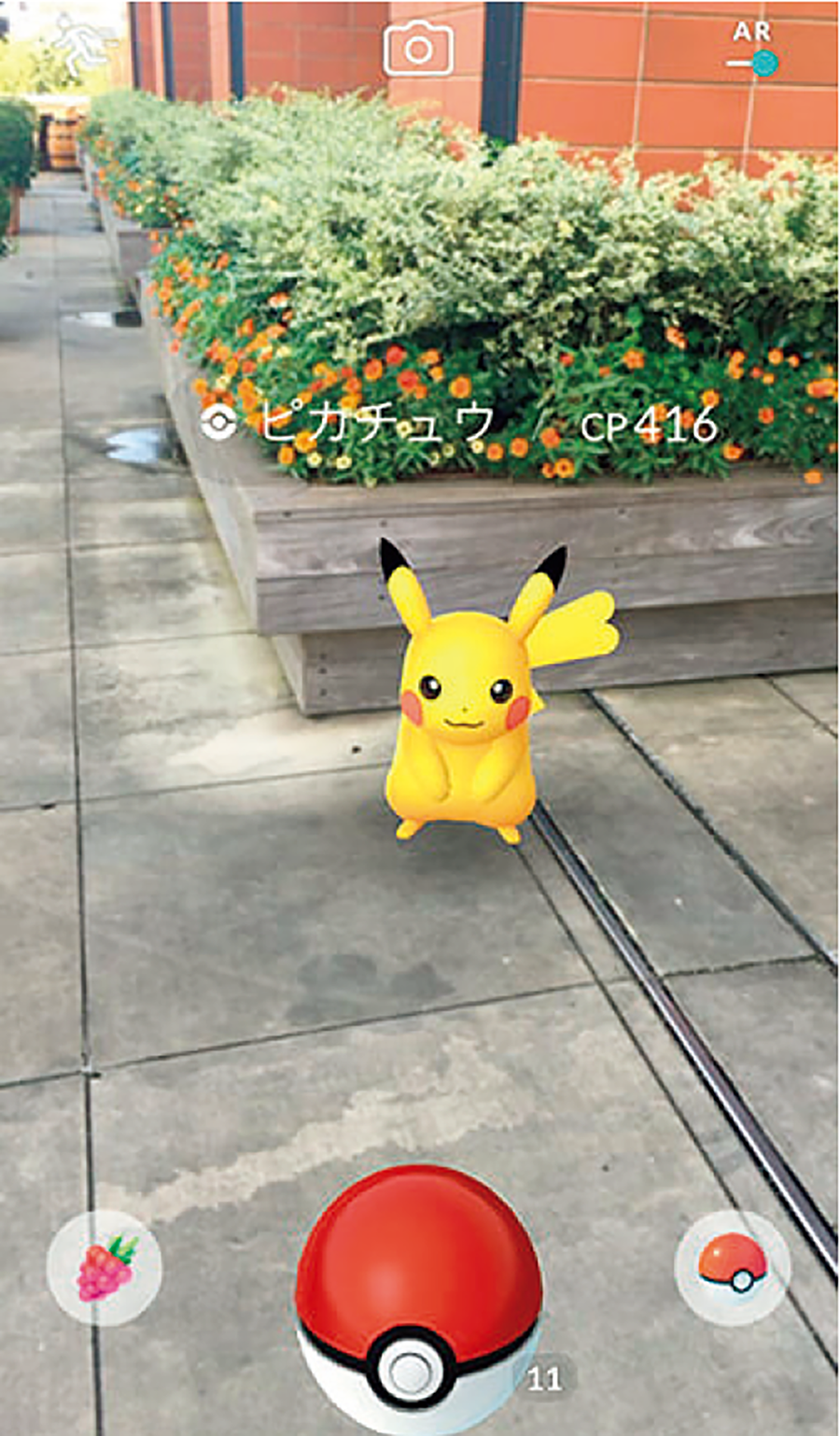
Furthermore, VR representations are also becoming more accessible. An example of the VR mapping of current and past landscapes is Ritsumeikan University's "Virtual Kyoto". This was created by superimposing photographic images on building shape data obtained by laser surveying, and it has been made publicly available on the Internet as a VR オンライン カジノ 引き出し that allows users to fly through or walk through virtual spaces in the heart of Kyoto City. Such technology is also being applied to the space of the metaverse. On the other hand, AR refers to the superimposition of maps and physical spaces in reality. This includes Pokémon GO, which has gained popularity as a game that makes use of location information.
Animated オンライン カジノ 引き出し that add movement and change to the visual representation of オンライン カジノ 引き出し have also become easier to create with digitalization. Digital geospatial information can also be converted into audio and used for voice communication in car navigation systems and smartphone navigation functions. This complements visual オンライン カジノ 引き出し while simultaneously creating barrier-free オンライン カジノ 引き出し for the visually impaired.
Given the diversification of オンライン カジノ 引き出し representation forms with the addition of multimedia representation, opportunities to represent maps visually as in the past may diminish. In particular, location-based services (LBS), which provide services by processing geospatial information with computers, often convert such information into text or audio or process it internally instead of representing it as maps. Therefore, while オンライン カジノ 引き出し information has become more widely used through digitalization, it is also being rendered invisible.
Changes in uses of オンライン カジノ 引き出し
According to the 2023 White Paper on Information and Communications in Japan, the personal smartphone usage rate is over 70% and around 60% of the population uses digital services for オンライン カジノ 引き出し and navigation. This suggests that more than half of the population views オンライン カジノ 引き出し on smartphones. As the use of オンライン カジノ 引き出し via the Internet gains traction, environments will be set up to allow anyone to use オンライン カジノ 引き出し anytime, anywhere. This situation also known as ubiquitous mapping is a major change brought about by the digitalization of オンライン カジノ 引き出し.
Of these targets, "anytime" and "anywhere" have been almost achieved in Japan, where the household coverage of fiber-optic Internet access is over 99%. However, "anyone" has not necessarily been achieved at this point in time, as there still exists a digital divide (information gap). In particular, some elderly people, among whom the usage rate of smartphones and other communication devices is low, are still unable to benefit from digitalization, including online オンライン カジノ 引き出し.
At the same time, the author's survey of online オンライン カジノ 引き出し use has revealed a difference in the use of maps between digital natives, who grew up surrounded by digital devices from the time they were born, and digital immigrants, who first came into contact with computers as adults, with younger individuals more likely to rely on smartphone maps. However, recent studies have shown that information that can be found by searching online tends to be harder to commit to memory (digital amnesia), raising concerns about the reliance on smartphones among young people. It has also been pointed out that when searching online for a オンライン カジノ 引き出し and the desired location is pinpointed, there is a risk of the user restricting their focus without looking outside of the location, making the route difficult to commit to memory when finding one's way using a navigation app. To avoid these negative effects of digitalization, it may be more effective to change the scale of the オンライン カジノ 引き出し, move the display area to look at the surrounding area, and use digital maps in conjunction with analog maps that offer a better view of the surroundings.
What will remain unchanged with digitalization and the future of オンライン カジノ 引き出し
As the digitalization of maps gains traction, it is expected that the creation of future maps will become automated by new technologies such as AI. However, the decision of what and how to encode and represent the real world on a オンライン カジノ 引き出し is ultimately left to humans. The technique of cartographic generalization, in which オンライン カジノ 引き出し symbols are simplified or omitted as necessary to make maps easier to read, remains a task that is challenging to automate, and オンライン カジノ 引き出し design is not yet at a stage where all tasks can be automated. In terms of オンライン カジノ 引き出し use, there are also concerns about negative effects such as the digital divide and digital amnesia outlined above, making it likely that analog maps will continue to coexist with digital maps for the time being. In such cases, analog and digital maps, which have their own strengths and weaknesses, should complement each other.
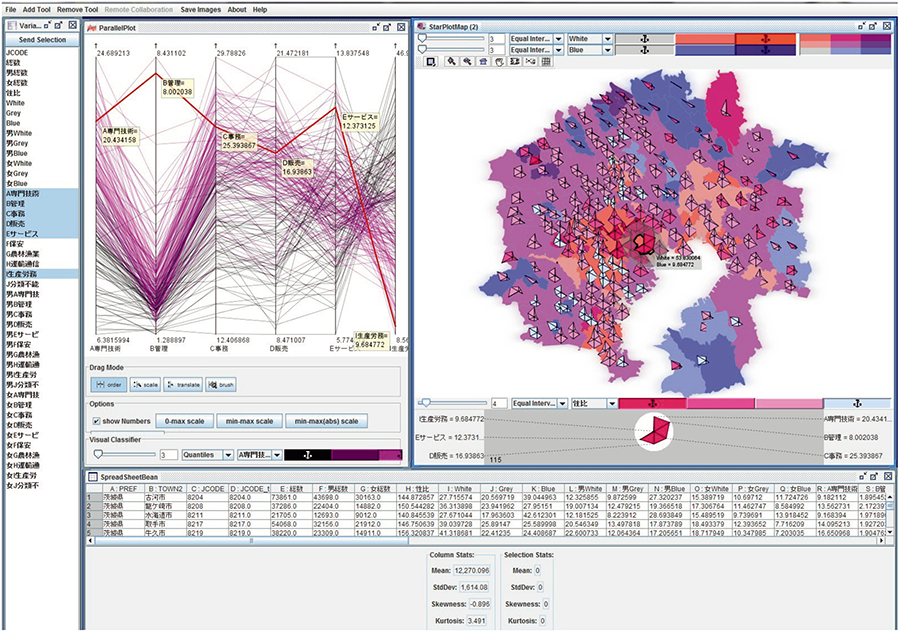
Although the digitalization of geospatial information may increase the opportunities to utilize such information without representing it as maps, the skill of reading maps as visual representations will basically remain the same as in the analog era. However, オンライン カジノ 引き出し reading may become easier depending on the design of the user interface for retrieving information helpful for reading the オンライン カジノ 引き出し. In fact, geographic visualization tools have been developed to represent various geospatial information in an aggregated manner on a single オンライン カジノ 引き出し and for reading information in an exploratory manner. For example, the figure below illustrates an exploratory analysis of the relationships between various population data items for the Tokyo metropolitan area using the GeoViz Toolkit developed by The Pennsylvania State University. Combining not only maps but also graphs and other graphical modes of representation can serve to capture information hidden in the data from multiple perspectives.
Such tools that visualize a massive amount of data using オンライン カジノ 引き出し and graphs are called dashboards. Dashboards have become widely known through their use, for instance, by Johns Hopkins University, whose dashboard was among the first to visualize the global spread of COVID-19.
New skills and knowledge different from those used for existing analog maps are required to make the most of digital maps featuring these novel modes of representation and interfaces, making a review of オンライン カジノ 引き出し literacy necessary as well. An understanding of digital technology is also essential for such a new form of オンライン カジノ 引き出し literacy.
- The first page
- Previous page
- page1
- Current page: page2
- 2 / 2
WAKABAYASHI Yoshiki(Professor Emeritus, Tokyo Metropolitan University)
Born in 1959. Graduated from Doctoral Course of Graduate School of Letters, Hiroshima University. PhD. His specialty is geography, cartography and geographic information science. His main publications are How to Read and Make オンライン カジノ 引き出し in a Digital Society (Dejitaru shakai no chizu no yomikata tsukurikata), Evolution of オンライン カジノ 引き出し (Chizu no shinkaron: chirikukanjoho to ningen no mirai), Theory and Applications of Participatory GIS (Sankagata GIS no riron to oyo), andUbiquitous Mapping.
The issue this article appears

No.64 "オンライン カジノ 引き出し"
オンライン カジノ 引き出し invite people into the unknown, and people get thrilled when presented with one―a simple sheet of paper.
From オンライン カジノ 引き出し carved into rocks and historically ancient オンライン カジノ 引き出し used in old times, to digital オンライン カジノ 引き出し made by satellite in the modern era, we humans have been perceiving the world through a variety of オンライン カジノ 引き出しNot only do they help us visualize the world’s shape and overall appearance, but sometimes imaginary worlds are also constructed based on them.
In this issue showcasing various maps, we examine how people have been trying to view the world and what they are trying to see.In the Obayashi Project, we took on the challenge of deciphering and reconstructing in three dimensions a fictional city オンライン カジノ 引き出し called the Hashihara Castle Town オンライン カジノ 引き出し (Hashiharashi Joka Ezu) drawn byKokugaku scholar MOTOORI Norinaga when he was nineteen years old.(Published in 2025)
-
Gravure: Is this also a オンライン カジノ 引き出し?
- View Detail
-
What Is a オンライン カジノ 引き出し?
MORITA Takashi(Professor Emeritus, Hosei University)
- View Detail
-
The Frontiers of オンライン カジノ 引き出し: From the Present to the Future
WAKABAYASHI Yoshiki(Professor Emeritus, Tokyo Metropolitan University)
- View Detail
-
Visible World, Invisible World
OTA Akio(Professor, Department of Visual Communication Design, College of Art and Design, Musashino Art University)
- View Detail
-
The Dreams and Solitude of a Youth Who Drew オンライン カジノ 引き出し
YOSHIDA Yoshiyuki(Honorary Director, Museum of Motoori Norinaga)
- View Detail
-
オンラインカジノ PROJECT
Deciphering the Hashihara Castle Town オンライン カジノ 引き出し: The Imaginary Town of MOTOORI Norinaga
Speculative Reconstruction by Obayashi Project Team
- View Detail
-
FUJIMORI Terunobu’s “Origins of Architecture” Series No. 15: Japanese Datum of Leveling Monument
FUJIMORI Terunobu (Architectural historian and architect; Director, Tokyo Metropolitan Edo-Tokyo Museum; and Emeritus Professor, University of Tokyo)
- View Detail
-
Interesting Facts About オンライン カジノ 引き出し
- View Detail